

Could the overlooked Reishi mushroom be more powerful than your daily vitamins?
In the realm of wellness, countless supplements promise better health and vitality. Yet, among these, one natural powerhouse remains largely overshadowed: the Reishi mushroom. Revered in traditional medicine for centuries, Reishi is now being rediscovered by modern science for its remarkable properties. As we explore its potential to support cellular health and help the body cope with oxidative stress, you might find yourself rethinking your daily wellness regimen. Let's uncover why Reishi deserves a place in your routine.
Antioxidant mechanisms of Reishi
Reishi mushrooms contain a variety of bioactive compounds, including polysaccharides, triterpenoids, and peptidoglycans, that contribute to their powerful antioxidant capabilities. These compounds work through several mechanisms to help the body manage oxidative stress:
Polysaccharides: These complex carbohydrates are known for their immune-modulating properties. In addition to supporting the immune response, polysaccharides in Reishi also exhibit antioxidant activity. They help scavenge free radicals and protect cellular components from oxidative damage, thereby supporting cellular integrity and function.
Triterpenoids: These are lipid-soluble compounds that have been extensively studied for their health benefits. Triterpenoids in Reishi mushrooms exhibit antioxidant as well as anti-inflammatory properties. They work by reducing the production of reactive oxygen species (ROS) and supporting the activity of the body's own antioxidant enzymes, providing a multi-faceted defence against oxidative stress.
Peptidoglycans: These compounds form part of the fungal cell wall and have been shown to have antioxidant properties. Peptidoglycans in Reishi can support the body's antioxidant defence mechanisms, helping to neutralise free radicals and protect lipids, proteins, and DNA from oxidative damage.
Adenosine: Another important bioactive compound found in Reishi mushrooms is adenosine, which plays a role in cellular energy transfer and has been shown to support blood circulation. Adenosine contributes to Reishi's antioxidant profile by helping protect cells from oxidative stress and supporting overall cellular health.
Sterols: Reishi mushrooms also contain sterols, steroid-like compounds that can help modulate cholesterol levels and have anti-inflammatory and antioxidant effects. Sterols help stabilise cell membranes and protect cells from oxidative damage, further enhancing the protective benefits of Reishi.
By working synergistically, these bioactive compounds in Reishi mushrooms provide a comprehensive approach to managing oxidative stress, making Reishi a valued natural ally for supporting overall health and wellness.
Reishi's impact on health
Reishi mushrooms employ several mechanisms to exert their antioxidant effects, each contributing to the overall reduction of oxidative stress in the body. These mechanisms involve supporting the body's natural antioxidant defences, helping neutralise harmful molecules, and supporting the integrity of cellular components. By understanding these processes, we can appreciate how Reishi mushrooms support cellular health and help protect against various forms of oxidative damage.
Supporting antioxidant enzyme activity: Reishi has been shown to support the activity of key antioxidant enzymes like superoxide dismutase and catalase, which help neutralise free radicals and reactive oxygen species.
Scavenging free radicals: The triterpenoids and other antioxidant compounds in Reishi can directly scavenge and neutralise free radicals, helping prevent cellular damage.
Reducing oxidative modification: Reishi has been found to help decrease the levels of oxidative modification products, such as oxidised proteins, that can accumulate and impair cellular function.
Supporting glutathione levels: Reishi supplementation has been linked to increased levels of reduced glutathione, a crucial antioxidant that helps protect cells from oxidative stress.
Reducing oxidative damage
By drawing on these antioxidant mechanisms, Reishi extract has demonstrated the ability to significantly reduce oxidative damage in various studies. For example, a study published in the Journal of Environmental Pathology, Toxicology and Oncology found that Reishi extract was able to normalise antioxidant enzyme activities and decrease oxidative modification products in rats with chemically-induced colon cancer.
Similarly, a study indexed on ResearchGate showed that Reishi extract was able to reduce oxidative stress and support the antioxidant defence systems in diabetic rats, highlighting its potential to help protect against the damaging effects of oxidative stress in chronic conditions.
Moreover, research has suggested that Reishi extract can help protect against oxidative damage induced by environmental toxins and pollutants. For instance, studies have shown that Reishi can help mitigate the oxidative stress caused by exposure to heavy metals, such as lead and cadmium, which are known to generate excessive free radicals and cause significant cellular damage. This indicates that Reishi could support cellular resilience and help reduce the harmful effects of environmental stressors on the body.
Implications for cellular health
The antioxidant properties of Reishi extract have important implications for supporting overall cellular health and function. By helping neutralise free radicals and reduce oxidative damage, Reishi can help maintain the integrity and vitality of cells throughout the body, potentially supporting organ function, sleep quality, a balanced inflammatory response, and resilience as we age.
Emerging research also suggests that the antioxidant benefits of Reishi may extend to supporting the nervous system. Studies have indicated that Reishi extract can help mitigate oxidative stress in neural cells, potentially offering neuroprotective effects. This further emphasises the comprehensive benefits of Reishi mushrooms, making them a valuable addition to a holistic wellness regimen.
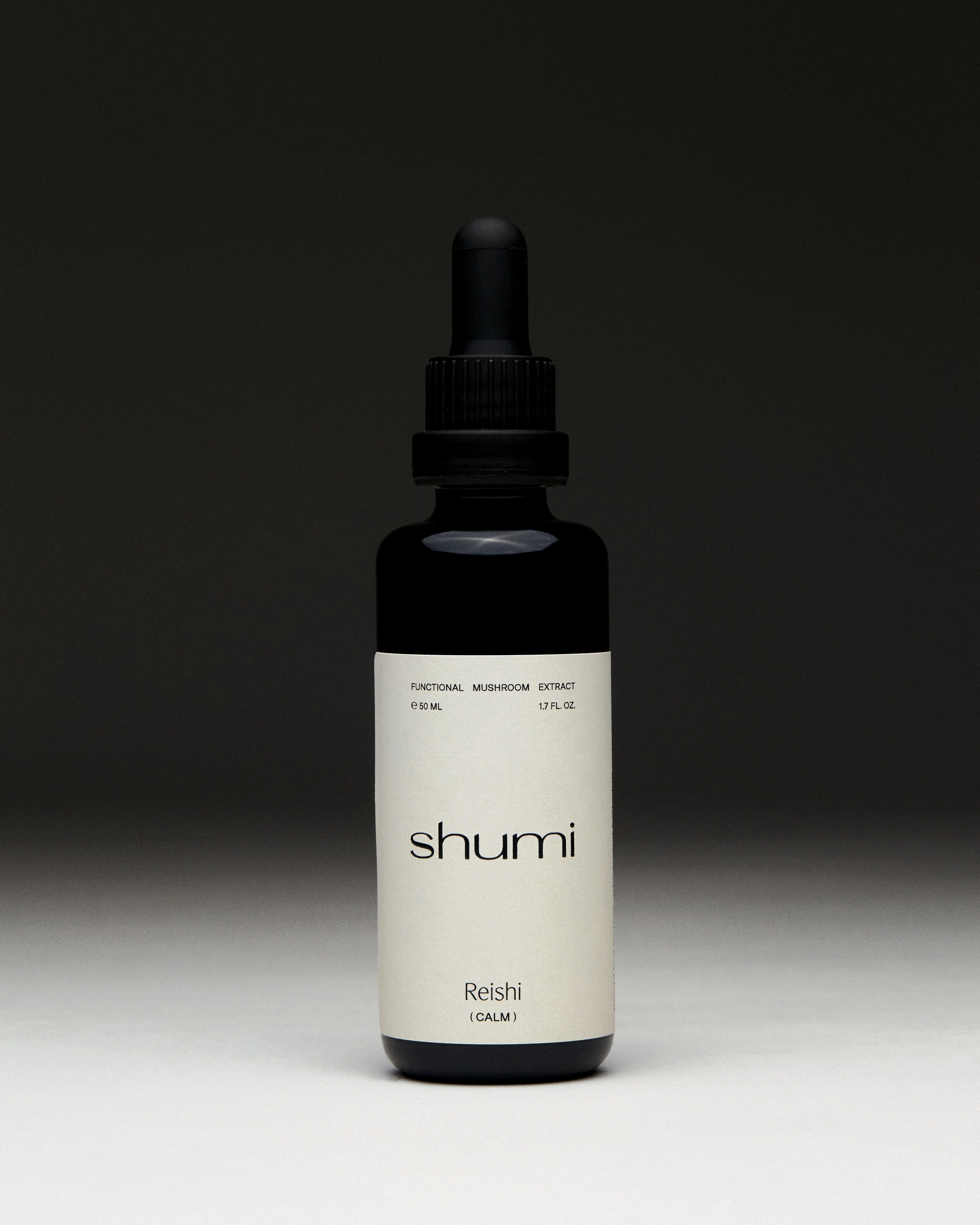
The robust antioxidant capabilities of Reishi extract make it a valuable natural compound for supporting cellular health and helping the body manage the effects of oxidative stress. As research continues to uncover the mechanisms behind Reishi's protective effects, it may emerge as a promising ally for a wide range of wellness goals. To put this into practice, explore Shumi's Reishi liquid extract, crafted for maximum potency and bioavailability.
References
- Rupa Health. (n.d.). Reishi 101: Benefits and Uses in Clinical Practice.
- Ahmed, R. (2020). A Review of Benefits of Active Ingredients of Reishi Mushroom (Ganoderma lingzhi) based on Scientifically Published Literature. LinkedIn.
- Shyshkin, V., Shyshkina, M., Kovalchuk, V., Kovalchuk, O., & Kravchenko, V. (2022). Effect of Dry Extract from Reishi Mushrooms on the Pro- and Antioxidant Systems in Rats with Chemically Induced Colon Carcinogenesis. Journal of Environmental Pathology, Toxicology and Oncology, 41(1), 1-12.
- Zhou, Y., et al. (2017). Neuroprotective effects of Ganoderma lucidum polysaccharides against oxidative stress-induced neuronal apoptosis.