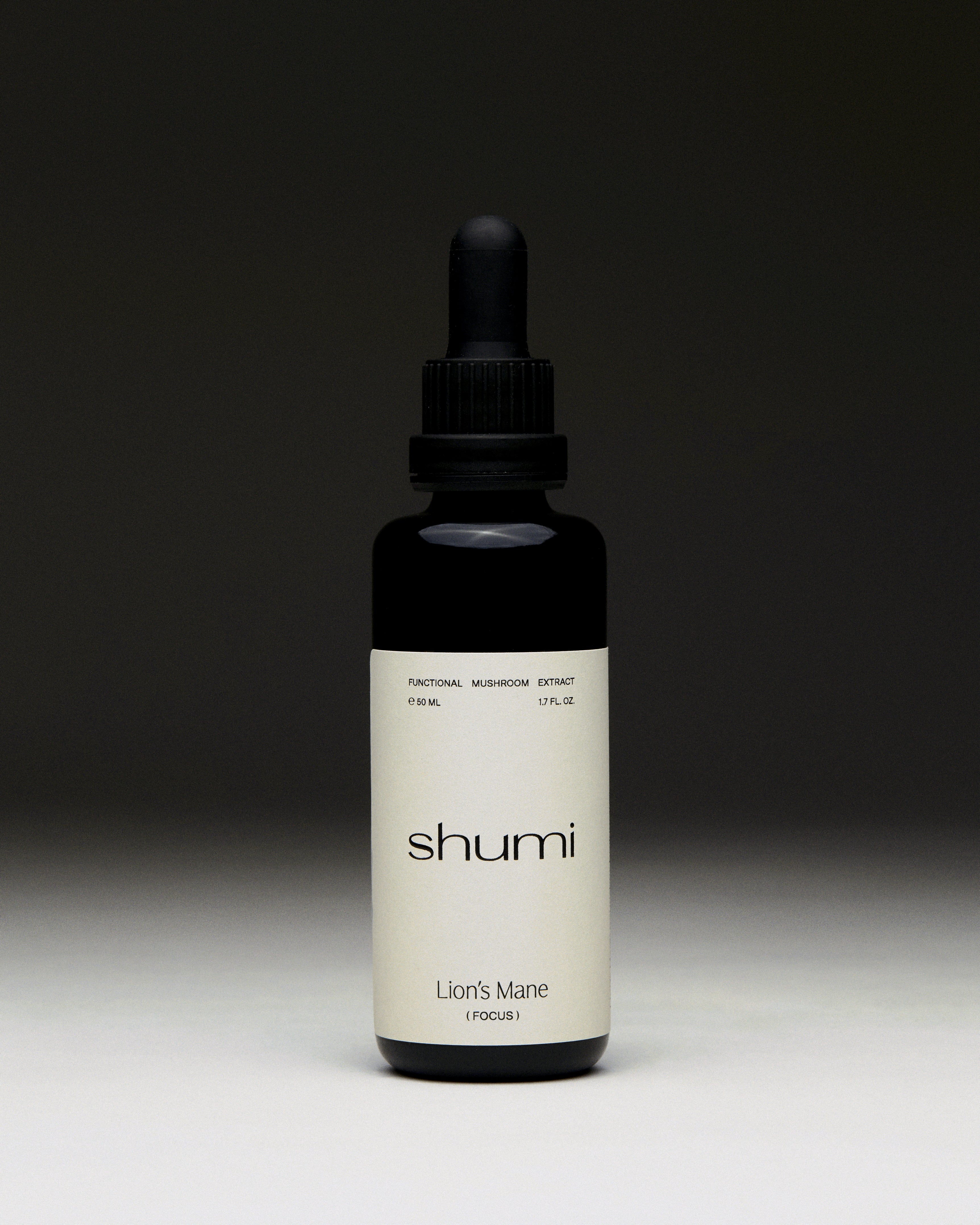


Lion's Mane er den funksjonelle soppen som er mest studert for hjerne- og kognitiv støtte, og grunnen er én enkelt mekanisme: forbindelsene i den studeres for å støtte nervevekstfaktor (NGF), et protein som nervesystemet ditt bruker til å vedlikeholde og reparere nevroner. Det er dette som ligger bak ryktet den har for fokus, hukommelse og mental klarhet. Her er hva forskningen faktisk støtter, og hva den ikke gjør.
NGF-mekanismen, i klartekst
Lion's Mane (Hericium erinaceus) inneholder to familier av aktive forbindelser: hericenones, som er konsentrert i fruktlegemet, og erinacines. I laboratoriestudier har disse vist seg å stimulere produksjonen av nervevekstfaktor (NGF), og i mindre grad brain-derived neurotrophic factor (BDNF). NGF er avgjørende for vekst, vedlikehold og overlevelse av nevroner, så alt som støtter den er av reell interesse for hjernehelsen. Dette er mekanismen bak i praksis alle kognitive påstander som gjøres om Lion's Mane; resten er detaljer.

Hva de menneskelige dataene viser
Den mest siterte studien på mennesker er en japansk dobbeltblind, placebokontrollert studie på eldre voksne med mild kognitiv svikt: i løpet av 16 uker scoret gruppen som tok Lion's Mane bedre på en kognitiv skala enn placebogruppen, selv om scorene falt tilbake etter at de sluttet å ta den (Mori et al., 2009). En senere studie rapporterte også forbedringer i kognitiv funksjon ved oralt inntak (Saitsu et al., 2019), og en egen liten studie rapporterte reduserte følelser av angst og nedstemthet etter fire uker (Nagano et al., 2010). Dette er lovende, men studiene er små og tidlige. Lion's Mane er en godt dokumentert nootrop etter sopp-standard, som er en beskjeden målestokk, ikke et bevist kognitivt legemiddel.
Fokus, hukommelse og humør
Når man setter studiene sammen, er områdene der Lion's Mane mest sannsynlig er nyttig:
- Fokus og mental klarhet, via NGF-støtte til sunn nevronfunksjon.
- Hukommelse, gjennom den samme støtten til nervebanene som er involvert i læring og gjenkalling.
- Et balansert humør, der de tidlige studiedataene peker mot beskjeden støtte til ro snarere enn noen dramatisk effekt.
Dette er alt sammen støtte til normal funksjon, ikke behandling. Lion's Mane er et verktøy for vedlikehold og støtte til en sunn hjerne, ikke en terapi for noen diagnostisert tilstand.
Er den trygg?
Lion's Mane tolereres generelt godt i studiene som er gjort så langt, uten alvorlige bivirkninger rapportert i studiene ovenfor. Som alltid, hvis du er gravid, ammer, tar medisiner eller håndterer en helsetilstand, sjekk med helsepersonellet ditt før du starter med et kosttilskudd.
Hvordan du tar den
Shumis Lion's Mane er en dobbeltekstrahert væske fra fruktlegemet, der hericenones finnes, omtrent 2 ml om dagen (to halve pipetter). Fordi NGF-effekten er kumulativ, betyr konsistens over uker langt mer enn tidspunkt; vi går inn på alternativene i når du bør ta Lion's Mane. For det separate spørsmålet om Lion's Mane og betennelse, se Lion's Mane og en balansert betennelsesrespons. Utforsk Shumis økologiske Lion's Mane-ekstrakt.
Kilder
- Mori, K., Inatomi, S., Ouchi, K., Azumi, Y., & Tuchida, T. (2009). Improving effects of the mushroom Yamabushitake (Hericium erinaceus) on mild cognitive impairment: a double-blind placebo-controlled clinical trial. Phytotherapy Research : PTR, 23(3), 367-72. https://doi.org/10.1002/ptr.2634
- Saitsu, Y., Nishide, A., Kikushima, K., Shimizu, K., & Ohnuki, K. (2019). Improvement of cognitive functions by oral intake of Hericium erinaceus. Biomedical Research (Tokyo, Japan), 40(4), 125-131. https://doi.org/10.2220/biomedres.40.125
- Nagano, M., Shimizu, K., Kondo, R., Hayashi, C., Sato, D., Kitagawa, K., & Ohnuki, K. (2010). Reduction of depression and anxiety by 4 weeks Hericium erinaceus intake. Biomedical Research (Tokyo, Japan), 31(4), 231-7. https://doi.org/10.2220/biomedres.31.231
- Friedman, M. (2015). Chemistry, Nutrition, and Health-Promoting Properties of Hericium erinaceus (Lion's Mane) Mushroom Fruiting Bodies and Mycelia and Their Bioactive Compounds. Journal of Agricultural and Food Chemistry, 63(32), 7108-23. https://doi.org/10.1021/acs.jafc.5b02914