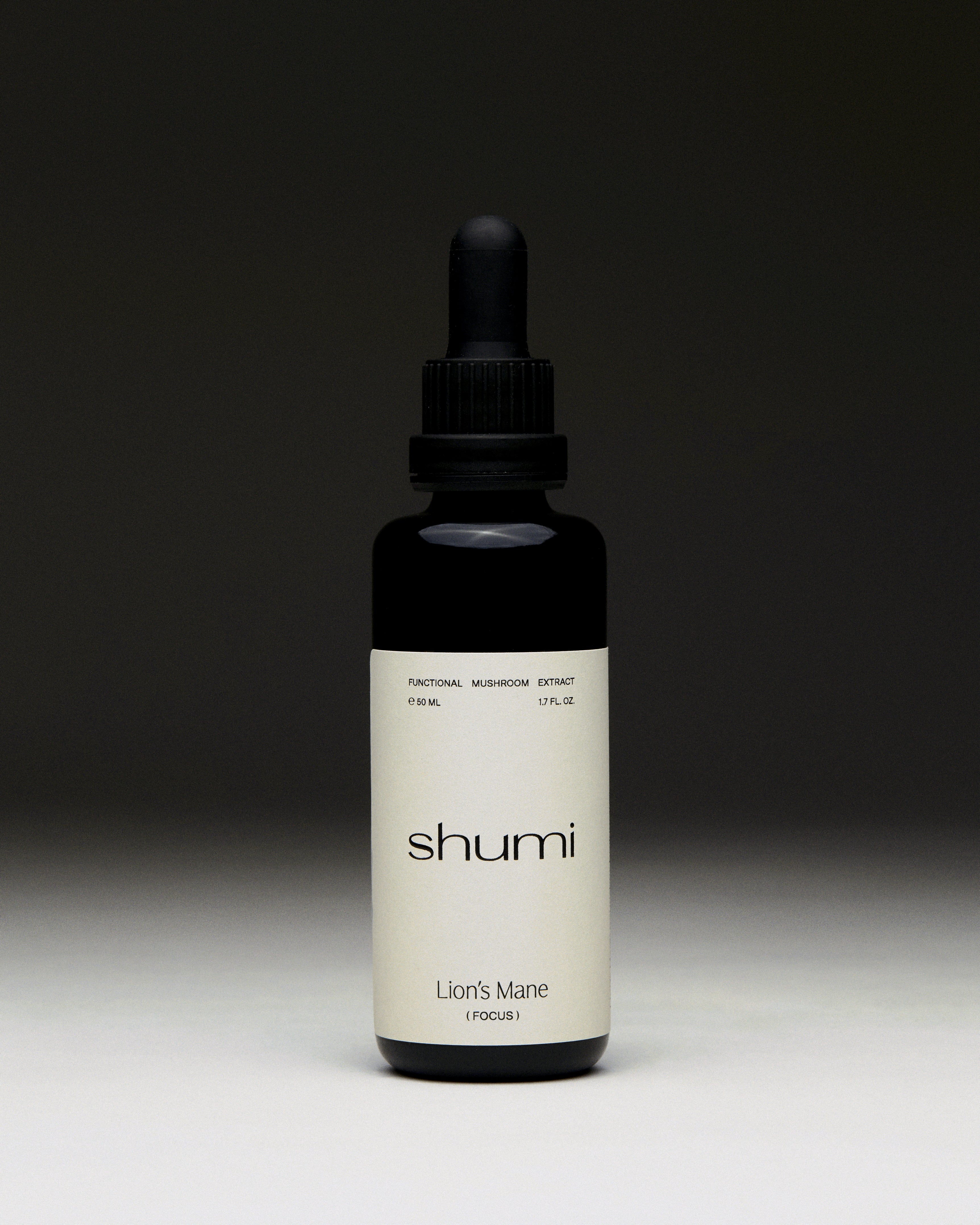


Lion's Mane is one of the most talked-about mushrooms for focus and mental clarity, yet the honest scientific picture is still early and evolving.
With its cascading, icicle-like spines, Hericium erinaceus has been valued in East Asian traditions for hundreds of years. Today it draws fresh attention from researchers exploring a genuinely interesting question: can a mushroom support the way we think and feel? Here is what the evidence actually supports, and where popular enthusiasm tends to run ahead of it.
What the research actually shows
Most human studies on Lion's Mane are small and early, so it is best seen as a promising area of research rather than a proven cognitive enhancer. The early signals are, however, interesting. In a double-blind, placebo-controlled trial, older adults taking Hericium erinaceus showed improved scores on a standard cognitive scale during the weeks they took it, with the benefit fading after they stopped. A later randomised trial reported similar improvements in cognitive assessments over twelve weeks.
These are encouraging findings, not final ones. Larger and longer studies are needed before anyone can claim Lion's Mane reliably sharpens memory or focus, which is exactly why we describe it as studied for cognitive support rather than proven to deliver it.
Why Lion's Mane is interesting: nerve growth factor
The scientific curiosity around Lion's Mane centres on two families of compounds found almost nowhere else in nature: hericenones and erinacines. Laboratory work summarised in a detailed review of the mushroom's chemistry shows these compounds can influence nerve growth factor (NGF), a protein involved in the maintenance and repair of nerve cells. That mechanism is the reason Lion's Mane is investigated for cognitive and nervous-system support, though most of this work is still preclinical. For a closer look, see our article on neural regeneration and neurological health.
Mood and everyday well-being
Lion's Mane is also studied for its relationship with mood. In a small four-week study, participants reported improvements in mood and a greater sense of calm while taking the mushroom, an effect researchers have linked to its influence on NGF and inflammation in the brain. As with the cognitive research, the sample was small, so the finding is best read as an early signal worth following. Read more about the mood-boosting benefits of Lion's Mane.
Inside the mushroom: the key compounds
- Hericenones and erinacines: unique to Lion's Mane and the main focus of the nerve growth factor research.
- Beta-glucans: polysaccharides in the cell wall that are studied for supporting the immune system and gut.
- Other constituents: phenolic compounds and other antioxidants that round out the mushroom's overall profile.
How we make our Lion's Mane extract
Potential is only useful if the extract is made well. We use organic fruiting bodies only, never mycelium grown on grain, so you get the part of the mushroom richest in the compounds above. The fruiting bodies undergo ultrasonic-assisted dual extraction in Finland, using a blend of 22% organic ethanol and Finnish spring water to draw out both the water-soluble and alcohol-soluble compounds. Every batch is certified organic to EU and USDA standards and lab-tested for purity. A daily serving is around 2 ml, roughly two half-pipettes, added to water, coffee or tea.
Explore the full details on our Lion's Mane Liquid Extract page, or browse the complete range in our extracts collection.
Lion's Mane sits at a genuinely exciting frontier. The research is early, the popular claims sometimes outpace it, and the most honest position is one of informed optimism: a fascinating mushroom, well worth exploring, with much of the science still being written.
References
- Mori, K., Inatomi, S., Ouchi, K., Azumi, Y., & Tuchida, T. (2009). Improving effects of the mushroom Yamabushitake (Hericium erinaceus) on mild cognitive impairment: a double-blind placebo-controlled clinical trial. Phytotherapy Research : PTR, 23(3), 367-72. https://doi.org/10.1002/ptr.2634
- Saitsu, Y., Nishide, A., Kikushima, K., Shimizu, K., & Ohnuki, K. (2019). Improvement of cognitive functions by oral intake of Hericium erinaceus. Biomedical Research (Tokyo, Japan), 40(4), 125-131. https://doi.org/10.2220/biomedres.40.125
- Nagano, M., Shimizu, K., Kondo, R., Hayashi, C., Sato, D., Kitagawa, K., & Ohnuki, K. (2010). Reduction of depression and anxiety by 4 weeks Hericium erinaceus intake. Biomedical Research (Tokyo, Japan), 31(4), 231-7. https://doi.org/10.2220/biomedres.31.231
- Friedman, M. (2015). Chemistry, Nutrition, and Health-Promoting Properties of Hericium erinaceus (Lion's Mane) Mushroom Fruiting Bodies and Mycelia and Their Bioactive Compounds. Journal of Agricultural and Food Chemistry, 63(32), 7108-23. https://doi.org/10.1021/acs.jafc.5b02914