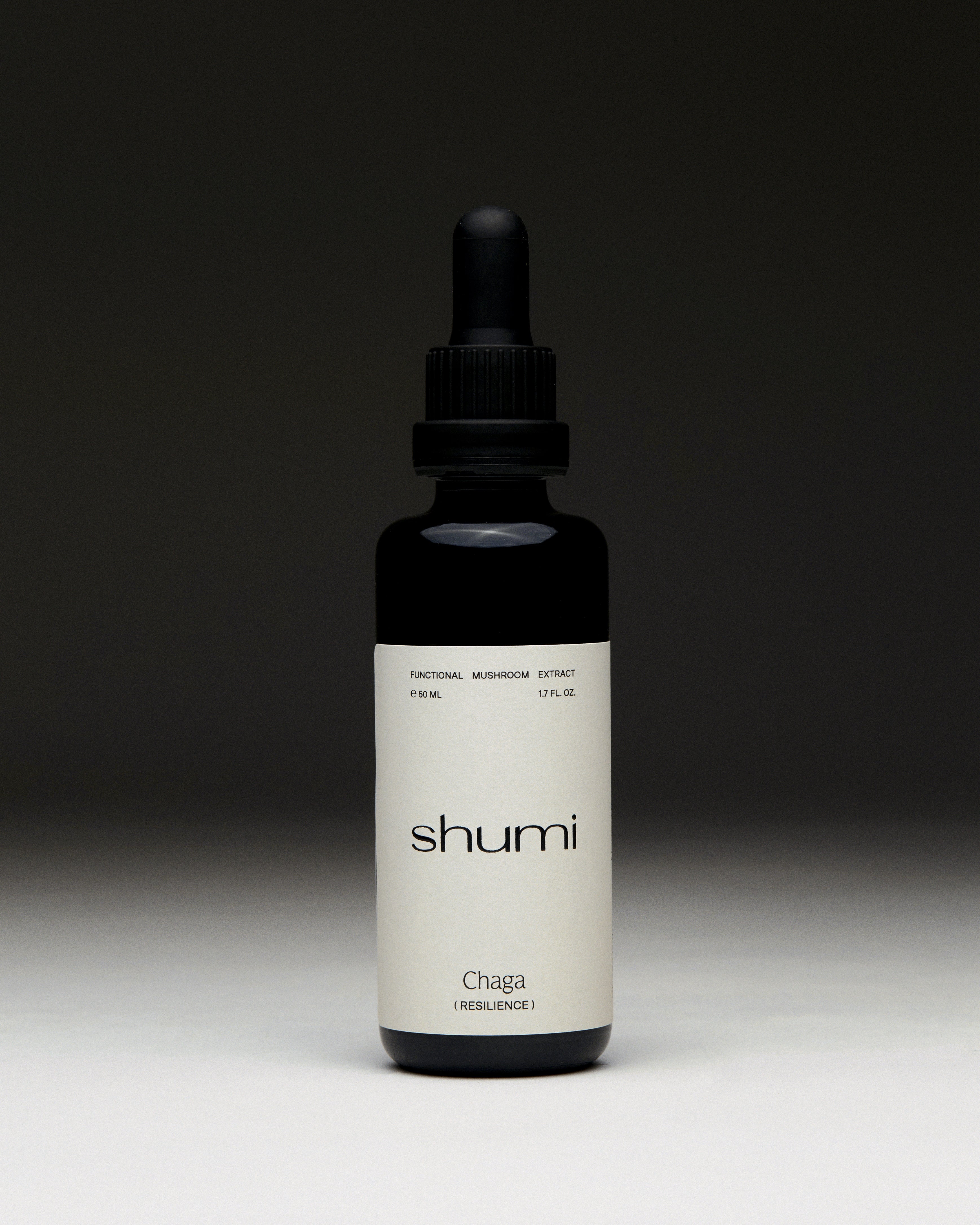


In an age of increasing environmental consciousness, the sourcing and harvesting of natural products have become just as important as the products themselves. Shumi, a provider of functional mushroom extracts, has taken this ethos to heart with its commitment to sustainable Chaga harvesting in the pristine forests of Arctic Finland.
The Untouched Wilderness of Arctic Finland
Shumi's Chaga is sourced from the remote, untouched forests of northern Finland, where the purity of the environment supports the growth of exceptional functional mushrooms. This region, situated above the Arctic Circle, is characterised by long, harsh winters and a short, intense growing season. These demanding conditions slow the mushroom's development, allowing it to build up a dense, robust profile of bioactive compounds over many years on its host birch.
The Arctic environment matters for more than romance. Far from heavy industry, agriculture and urban pollution, the air, soil and water are exceptionally clean. Because Chaga draws nutrients directly from its host tree and the surrounding ecosystem, the purity of that environment is reflected in the purity of the final extract. Cold-climate Chaga is often sought after on the basis that the slow, stress-tested growth above the Arctic Circle is thought to favour a concentrated profile of polysaccharides and polyphenols. This is part of our sourcing rationale rather than a guarantee of any particular result.
Why Finnish Chaga
Finland's vast, sparsely populated birch forests offer some of the wild-growing conditions we look for, and Finnish wild-harvesting follows a long tradition of working with the forest rather than against it. Under Nordic "everyman's right" customs and responsible foraging practice, harvesters take only mature conks and only what the forest can sustainably replace, leaving the wider population to continue its slow growth undisturbed. For Shumi, choosing Finnish Chaga means choosing a raw material shaped by clean air, cold winters and generations of foraging know-how.
Sustainable Harvesting Practices
Shumi's harvesting practices are designed to support the long-term sustainability of the Chaga population in these delicate ecosystems. Rather than stripping the trees bare, Shumi's foragers carefully remove only a portion of the Chaga conk, leaving the remainder intact to continue growing and spreading its spores. This selective approach allows the mushroom to regenerate and thrive, helping to support a consistent supply for years to come.
Because Chaga grows slowly, a single conk can take many years to reach maturity. Responsible harvesting therefore means harvesting at the right stage and never clear-cutting an area. Foragers are guided to spread collection across wide stretches of forest, return to the same sites only after long recovery periods, and avoid young or immature growth entirely. This patient, low-impact approach protects both the mushroom and the wider woodland it depends on.
Preserving the Birch-Chaga Relationship
The Chaga mushroom has a close relationship with the birch trees it colonises, drawing nutrients and compounds from the tree over many years. Shumi's harvesters are trained to respect this delicate balance, taking care not to damage the host tree during the harvesting process. By preserving the birch-Chaga relationship, Shumi helps the mushroom continue to grow and develop its full range of bioactive compounds.
Fruiting-Body Sourcing
Shumi sources the wild-grown Chaga conk itself, the dense fruiting-body material that develops on living birch, rather than mycelium grown on grain in a laboratory. We see this distinction as important: depending on how they are made, grain-grown mycelium products can carry more starch from the growing medium and a lower concentration of the compounds people associate with Chaga. By starting with genuine wild fruiting-body material, Shumi works with the part of the mushroom where nature has concentrated its bioactive compounds. You can read more about this in our guide to choosing fruiting body over mycelium.
Third-Party Testing and Transparency
Shumi's commitment to sustainability extends beyond the harvesting process. The company provides detailed information about the origin and journey of its Chaga extracts, allowing customers to trace the product from the forests of Finland to their own homes. This level of transparency builds trust and assures customers that they are supporting a brand that prioritises environmental stewardship.
Every batch undergoes rigorous third-party testing to verify purity and consistency, with results documented in a Certificate of Analysis. Independent laboratory testing checks the extract against contaminants and confirms the presence of the compounds that make Chaga valuable, reflecting our steadfast commitment to transparency and quality.
The Compounds Behind Chaga
The environmental conditions of Arctic Finland, combined with Shumi's sustainable harvesting practices, result in a Chaga extract that is rich in bioactive compounds. Compounds such as betulinic acid and polysaccharides have been studied for their potential role in supporting the body's natural ability to adapt to everyday stress and maintain balance. To experience clean, sustainably harvested Arctic Chaga for yourself, explore our Chaga liquid extract.
Research context
The points below are drawn from general laboratory research on Chaga rather than from studies of Shumi's own product. The sources are listed in the References section.
- Reviews of Inonotus obliquus (Chaga) polysaccharides describe how extracts from different regions can show varying levels of antioxidant activity in laboratory testing.
- Some research suggests the method of harvesting and processing Chaga can influence its compound profile, with ultrasonically extracted material showing higher antioxidant activity than conventionally extracted material in vitro.
- The phenolic compounds in Chaga are often described as a key factor in its antioxidant activity in laboratory studies.
By choosing Shumi's Chaga, you can enjoy this remarkable mushroom while knowing that your purchase supports a brand dedicated to preserving the delicate balance of the natural world.
References
- Lu, Y., Jia, Y., Xue, Z., Li, N., Liu, J., & Chen, H. (2021). Recent Developments in Inonotus obliquus (Chaga mushroom) Polysaccharides: Isolation, Structural Characteristics, Biological Activities and Application. Polymers, 13(9). https://doi.org/10.3390/polym13091441
- Balandaykin, M. E., & Zmitrovich, I. V. (2015). Review on Chaga Medicinal Mushroom, Inonotus obliquus (Higher Basidiomycetes): Realm of Medicinal Applications and Approaches on Estimating its Resource Potential. International Journal of Medicinal Mushrooms, 17(2), 95-104. https://doi.org/10.1615/intjmedmushrooms.v17.i2.10
- Diaz, P., Jeong, S. C., Lee, S., Khoo, C., & Koyyalamudi, S. R. (2012). Antioxidant and anti-inflammatory activities of selected medicinal plants and fungi containing phenolic and flavonoid compounds. Chinese Medicine, 7(1), 26. https://doi.org/10.1186/1749-8546-7-26