

Reishi's relevance to cellular health comes down to one thing: it is rich in antioxidant compounds that help the body manage oxidative stress, the everyday cellular wear-and-tear caused by free radicals. It is not a magic protector and it will not undo an unhealthy lifestyle, but as a daily, food-derived source of antioxidants it is a sensible way to support your cells' own defences. Here is what is actually in it, and what the research supports.
The antioxidant compounds in Reishi
Reishi (Ganoderma lucidum) owes its antioxidant reputation to a few groups of bioactive compounds working together:
- Triterpenoids, including the ganoderic acids that give Reishi its bitterness: lipid-soluble compounds studied for helping reduce reactive oxygen species and supporting the body's own antioxidant enzymes.
- Polysaccharides, chiefly beta-glucans: best known for immune support, they also scavenge free radicals and help protect cell components from oxidative damage.
- Peptidoglycans and sterols: further compounds studied for stabilising cell membranes and supporting antioxidant defences.
The point is that Reishi is not a single-molecule antioxidant; it is a spread of compounds that support the body's antioxidant systems in different ways.
How antioxidant support actually helps
Oxidative stress happens when free radicals outpace your body's ability to neutralise them, and over time that imbalance is part of normal ageing and the toll of a stressful, poorly-slept, processed-food modern life. Reishi's compounds are studied for two useful things here: directly scavenging some free radicals, and supporting the activity of your own antioxidant enzymes such as superoxide dismutase and catalase. Supporting your built-in defences is more meaningful than any single dose of an isolated antioxidant.
What the evidence looks like
Most of the antioxidant research on Reishi is preclinical, in laboratory and animal models, and is summarised in the major reviews of its pharmacology (Wachtel-Galor et al., 2011; Sanodiya et al., 2009). That is worth being honest about: the mechanism is well characterised and consistent, but large human antioxidant trials are still limited. So Reishi is a well-studied traditional antioxidant food, not a proven treatment for anything, and it belongs in the support column alongside a good diet, not as a substitute for one.
Where it connects to the rest of your wellbeing
Because oxidative stress touches so many systems, Reishi's antioxidant support overlaps with its other traditional uses, from a balanced inflammatory response to sleep quality. It is one of the reasons Reishi is such a common evening adaptogen: calmer, better-rested and less oxidatively stressed tend to move together.
How to take it
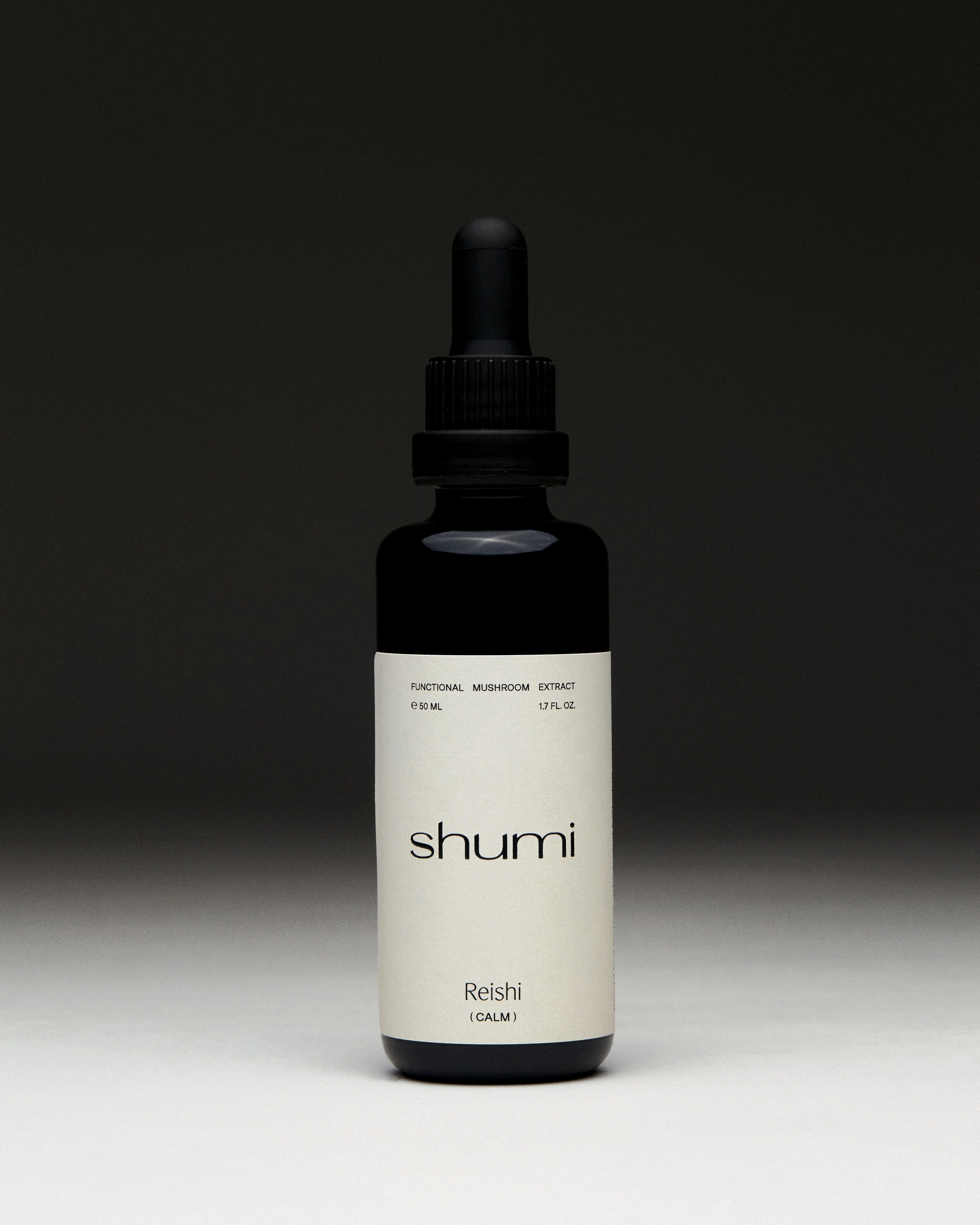
Shumi's Reishi is a dual-extracted liquid from the fruiting body, about 2 ml a day (two half-pipettes), taken straight or in a warm drink, usually in the evening. Antioxidant support is a slow, cumulative thing, so consistency over weeks matters more than any single dose. Explore Shumi's organic Reishi extract.
References
- Wachtel-Galor, S., Yuen, J., Buswell, J. A., & Benzie, I. F. F. (2011). Ganoderma lucidum (Lingzhi or Reishi): A medicinal mushroom. In I. F. F. Benzie & S. Wachtel-Galor (Eds.), Herbal Medicine: Biomolecular and Clinical Aspects (2nd ed.). CRC Press/Taylor & Francis. https://www.ncbi.nlm.nih.gov/books/NBK92757/
- Sanodiya, B. S., Thakur, G. S., Baghel, R. K., Prasad, G. B., & Bisen, P. S. (2009). Ganoderma lucidum: a potent pharmacological macrofungus. Current Pharmaceutical Biotechnology, 10(8), 717-42. https://doi.org/10.2174/138920109789978757