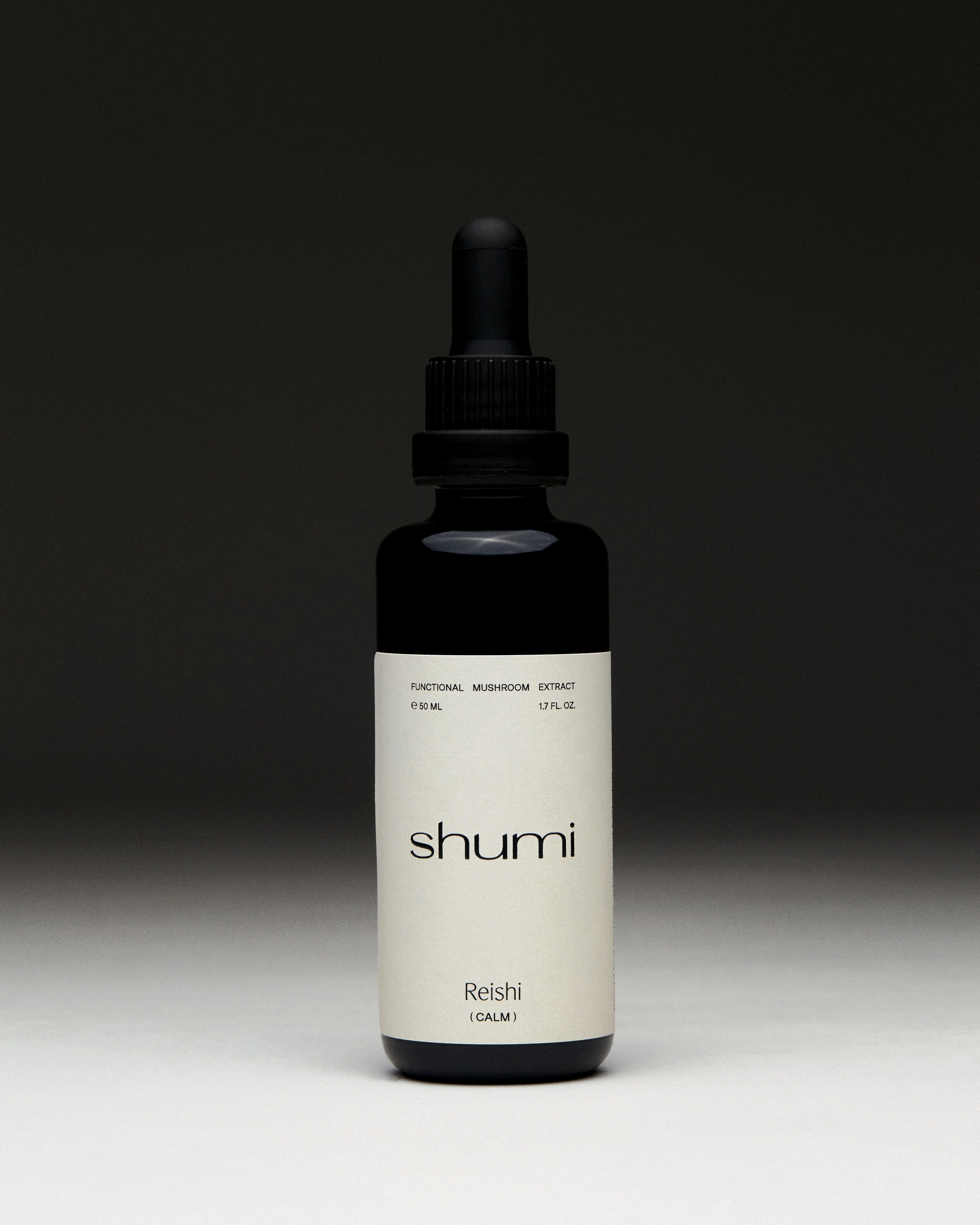


Reishi is a slow, cumulative mushroom rather than a quick fix: its value comes from taking a consistent daily amount over weeks and months, and the changes most people notice are gentle and supportive rather than dramatic. If you keep taking Reishi (Ganoderma lucidum), here is what the compounds actually are, what current evidence can honestly support, and what is realistic to expect.
What you are actually taking
Reishi's reputation rests on two families of compounds. The first is its polysaccharides, including beta-glucans, the water-soluble fibres most associated with immune support. The second is its triterpenes, a group that includes the bitter-tasting ganoderic acids largely unique to this species. A quality extract aims to capture both, which is why how Reishi is prepared matters as much as how much you take.
A realistic timeline
It is worth being honest here: Reishi is not a stimulant, and you are unlikely to feel a marked difference after a single serving. Traditional systems have always treated it as a tonic taken steadily over long periods, and that framing still fits the evidence. In the early days you are simply building a consistent intake. Any supportive effects people describe, whether around calm, sleep quality or general resilience, tend to be noticed gradually with continued daily use, and they sit on top of the basics of good sleep, diet and movement rather than replacing them.
Immune support
The most studied aspect of Reishi is its polysaccharides. In laboratory and animal research, Ganoderma beta-glucans have been shown to support the activity of immune effector cells such as macrophages and natural killer cells [3]. Broader pharmacological reviews describe Reishi's polysaccharides as immunomodulating, meaning they are studied for helping the immune system stay balanced rather than simply switched up or down [1]. Human evidence is still developing, so this is best thought of as gentle support for the body's natural defences.
Calm, mood and sleep
Reishi is traditionally classed as an adaptogen, a term for plants and fungi used to help the body cope with everyday stress [2]. Many people take it in the evening for exactly this reason, valuing a sense of winding down at the end of the day. It is worth setting expectations honestly: the specific human trials on Reishi, sleep and mood are limited, so the calming reputation rests largely on traditional use and early research rather than firm proof of a mechanism. If better rest is your main goal, Reishi is best seen as one supportive part of a wider routine.
Antioxidant activity and a balanced inflammatory response
Reishi's triterpenes and polysaccharides show antioxidant activity in laboratory studies, helping counter oxidative stress at a cellular level [1][2]. The same triterpenes are studied for the way they help moderate the body's inflammatory signalling, which is part of why Reishi is associated with a balanced inflammatory response over the long term. As with its other properties, this is an area of active research rather than settled fact, and the honest position is one of promising, well-characterised compounds.
What about the liver?
Ganoderic acids, the characteristic triterpenes mentioned above, are the compounds most often linked to Reishi's traditional use for the liver and overall vitality [2]. It is a genuine area of scientific interest, but robust human data are limited, so we would not make firm claims here. The sensible takeaway is that Reishi is a well-studied source of these compounds, not a shortcut to organ health.
How to take it, and what to expect
Consistency is the whole point. A typical daily serving is around 2 ml, or two half-pipettes, and many people prefer it in the evening. At Shumi our Reishi liquid extract is made only from the fruiting body (never mycelium grown on grain), using ultrasonic-assisted dual extraction in Finland with 22% organic ethanol and local spring water so that both the polysaccharides and the triterpenes end up in the bottle. Every batch is EU and USDA organic certified and independently lab-tested.
Realistically, keeping Reishi in your routine is a long game. Some people notice a gentle sense of calm or steadier sleep within a few weeks; others feel little day to day and simply value the antioxidant and immune-supporting compounds they are taking. Either way, the sensible approach is a modest daily amount, given time, alongside the fundamentals of a healthy lifestyle. You can read more on evening use in our guide to Reishi and restful sleep.
References
- Sanodiya, B. S., Thakur, G. S., Baghel, R. K., Prasad, G. B., & Bisen, P. S. (2009). Ganoderma lucidum: a potent pharmacological macrofungus. Current Pharmaceutical Biotechnology, 10(8), 717-42. https://doi.org/10.2174/138920109789978757
- Wachtel-Galor, S., Yuen, J., Buswell, J. A., & Benzie, I. F. F. (2011). Ganoderma lucidum (Lingzhi or Reishi): A medicinal mushroom. In I. F. F. Benzie & S. Wachtel-Galor (Eds.), Herbal Medicine: Biomolecular and Clinical Aspects (2nd ed.). CRC Press/Taylor & Francis. https://www.ncbi.nlm.nih.gov/books/NBK92757/
- Zhu, X. L., Chen, A. F., & Lin, Z. B. (2007). Ganoderma lucidum polysaccharides enhance the function of immunological effector cells in immunosuppressed mice. Journal of Ethnopharmacology, 111(2), 219-26. https://doi.org/10.1016/j.jep.2006.11.013