

In functional mushroom supplements, one sourcing question comes up again and again: fruiting body or mycelium? Both have their place, but at Shumi we choose to work with fruiting bodies. Here is our reasoning, set out honestly as a sourcing choice rather than as settled science.
What the fruiting body is
The fruiting body is the mature, above-ground part of a mushroom, the familiar cap and stem. It is the reproductive structure responsible for producing spores, and in many species it is where a good deal of the mushroom's bioactive compounds, such as beta-glucans and triterpenes, are found.

Why Shumi chooses fruiting body
Our preference for fruiting-body material comes down to a few practical reasons. We see it as a considered sourcing choice, not a claim that mycelium has no value.
- Compound profile: Fruiting bodies are generally regarded as carrying a fuller concentration of the compounds people look for in functional mushrooms. Friedman's 2015 review notes that fruiting-body and mycelium material can differ in their bioactive-compound content, which is part of why we prefer to start with the fruiting body.
- Traditional form: The fruiting body is the part of the mushroom that has been eaten and used for centuries, so it is the form with the longest track record of traditional use.
- Fewer growing-medium fillers: Many mycelium supplements are grown on grain such as brown rice or oats, and the grain is often left in the finished powder. This can raise the starch content and make the actual mushroom content harder to judge. Starting with fruiting-body material sidesteps that ambiguity.
Being fair about mycelium
Mycelium is not without merit, and research into it continues. Our point is a narrow one: when mycelium is grown on grain and the substrate is not separated out, it can be difficult for a customer to know how much of the product is mushroom and how much is leftover growing medium. Compared with fruiting bodies, the body of research on mycelium-on-grain products is also still developing. For those reasons we prefer to keep things simple and start with the fruiting body.
How this fits Shumi's approach
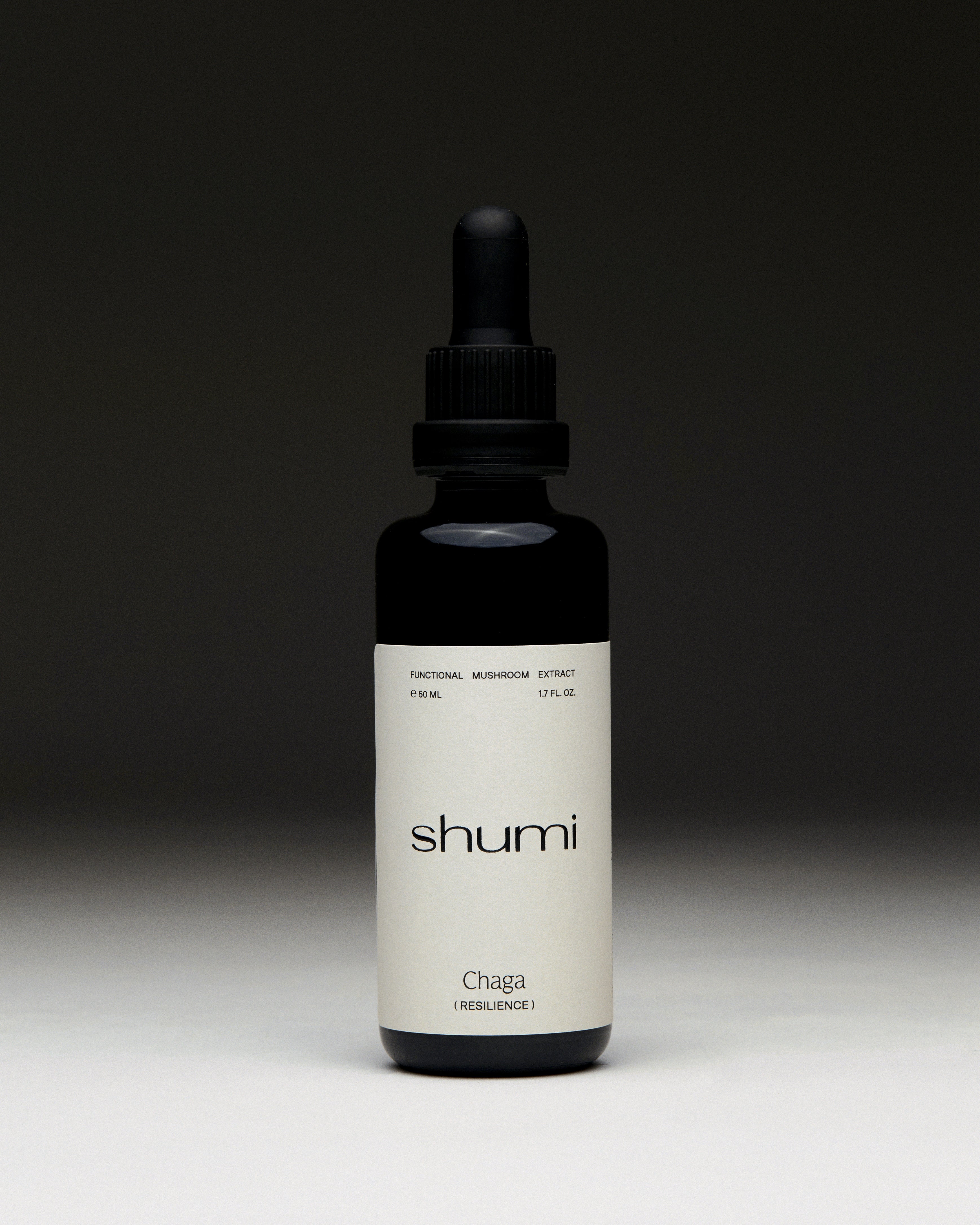
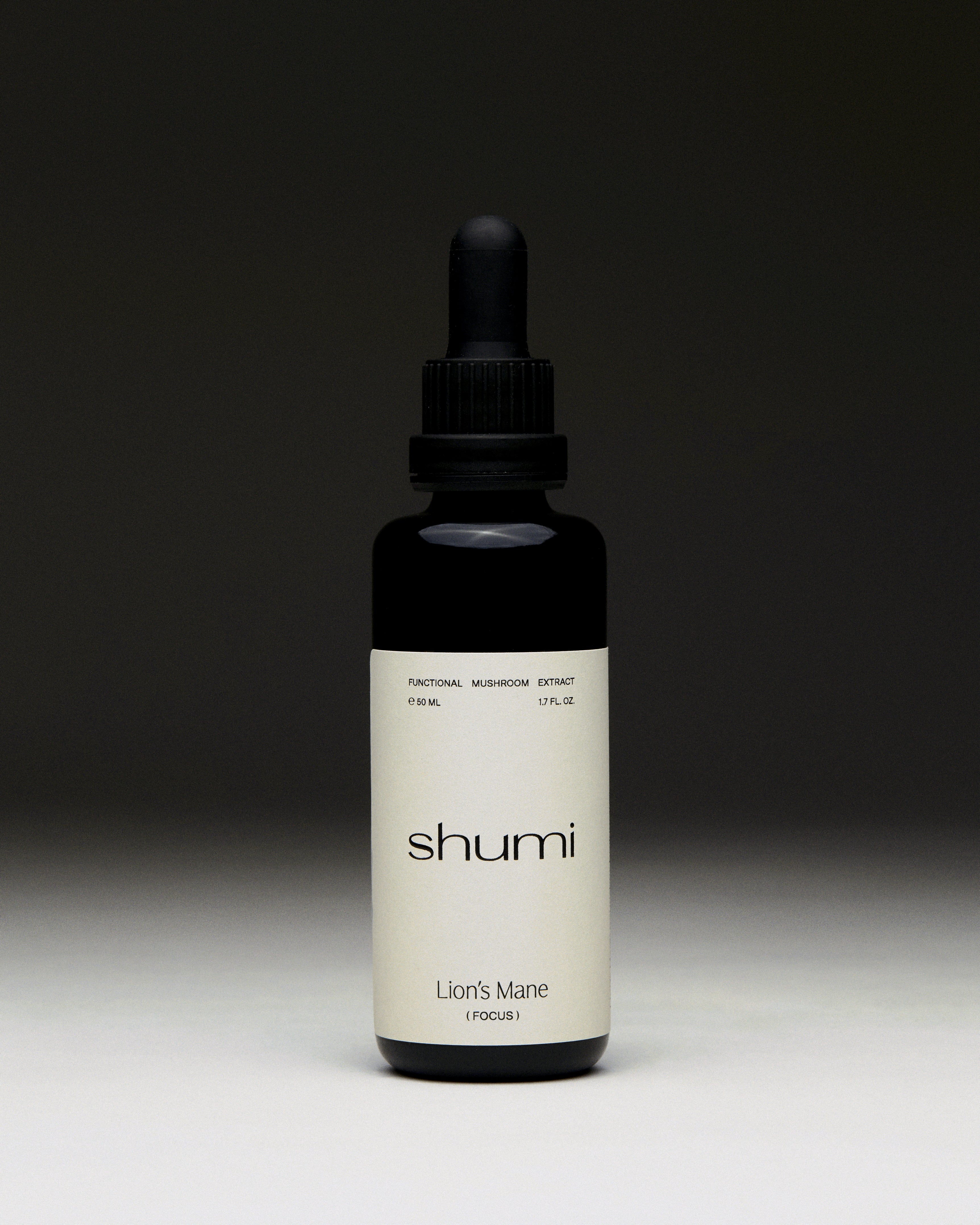
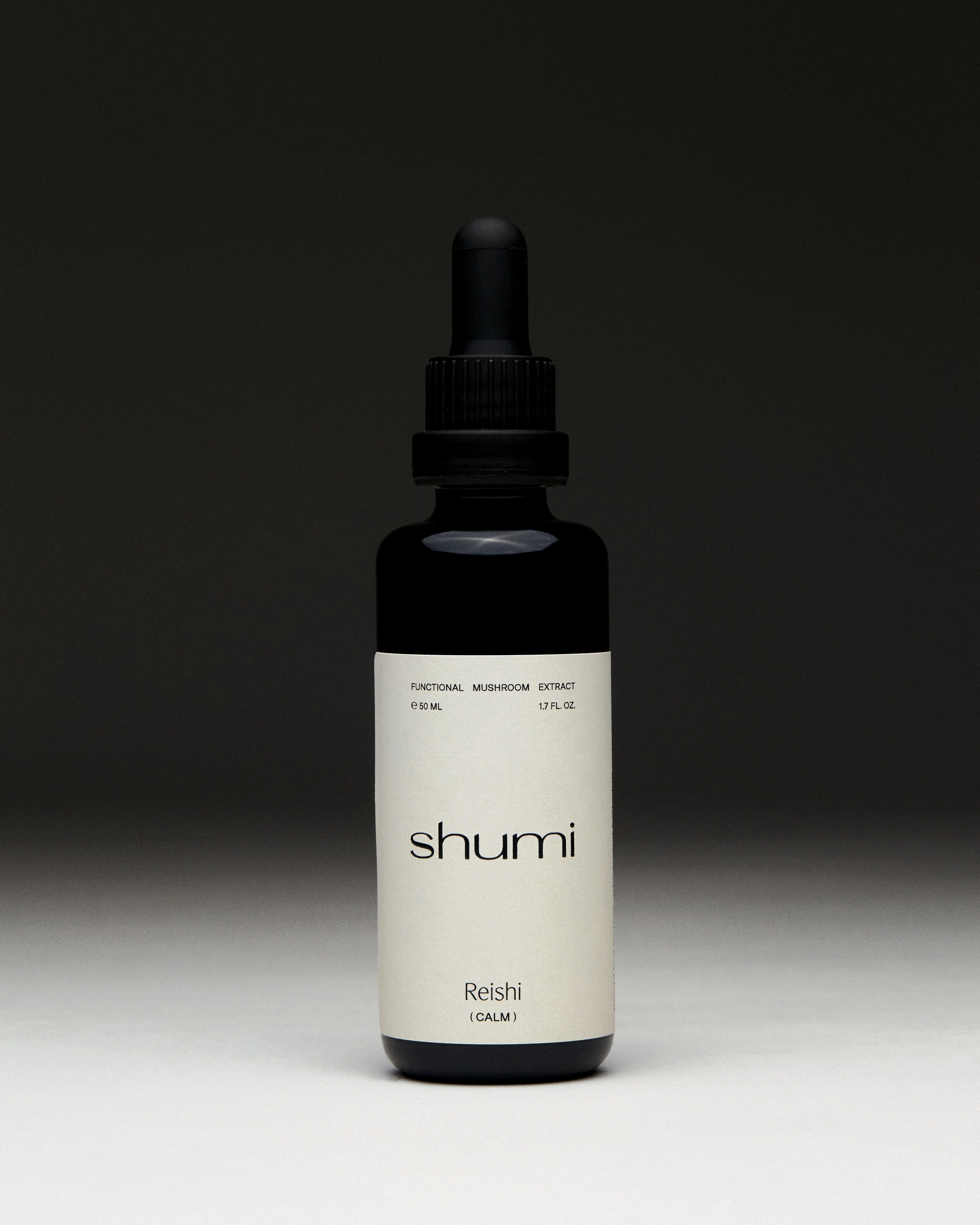
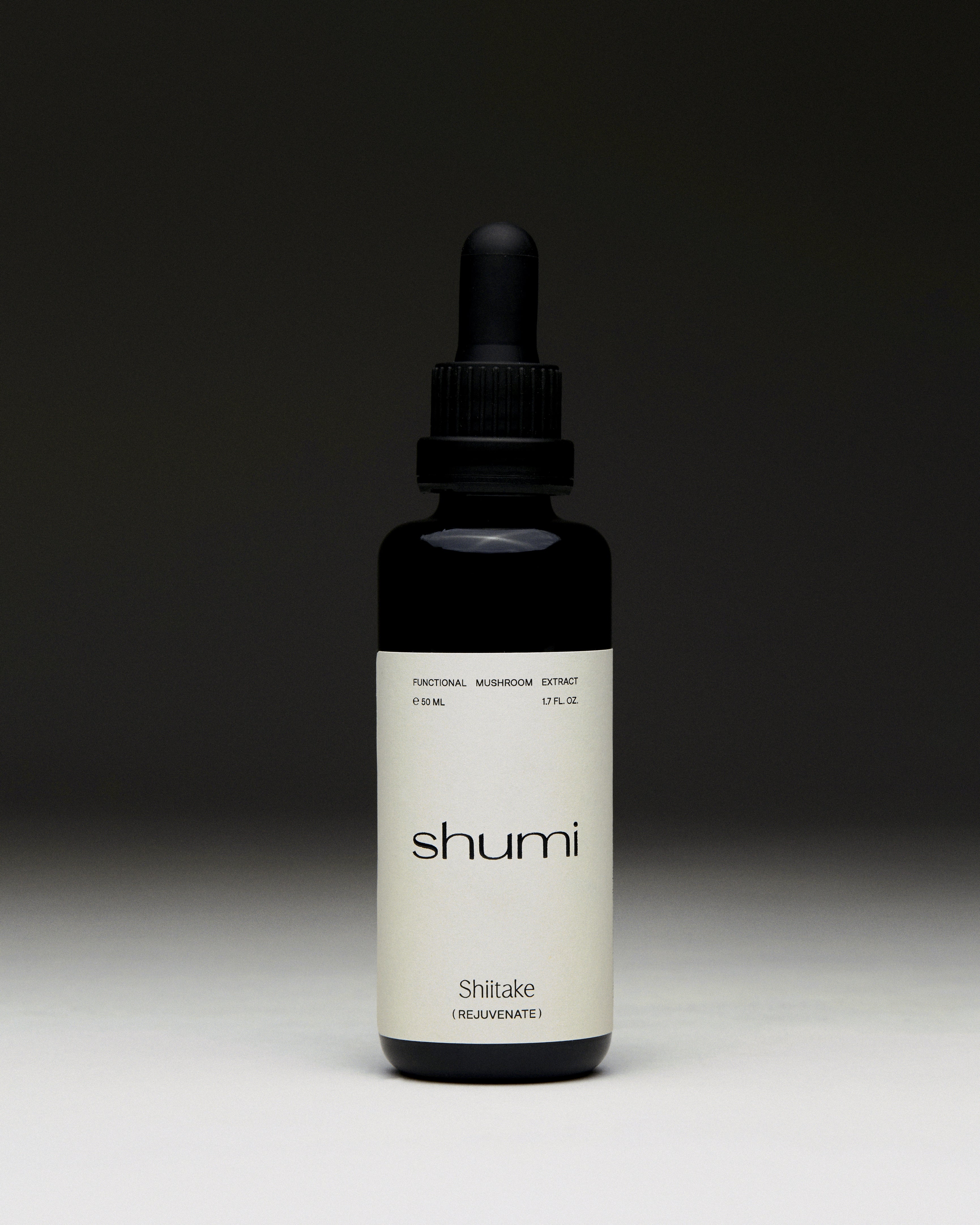
At Shumi we make our extracts from organic fruiting bodies, using dual extraction combined with ultrasonic extraction in Finland, batch lab-tested and both EU and USDA certified organic. Choosing fruiting-body material is the first step in that process. To understand why the raw material then needs careful extraction, see our guide on why bioavailability matters in mushroom supplements. You can also explore our Holistic Wellness Set to try our full range of organic fruiting-body extracts together.
References
- Friedman, M. (2015). Chemistry, Nutrition, and Health-Promoting Properties of Hericium erinaceus (Lion's Mane) Mushroom Fruiting Bodies and Mycelia and Their Bioactive Compounds. Journal of Agricultural and Food Chemistry, 63(32), 7108-23. https://doi.org/10.1021/acs.jafc.5b02914