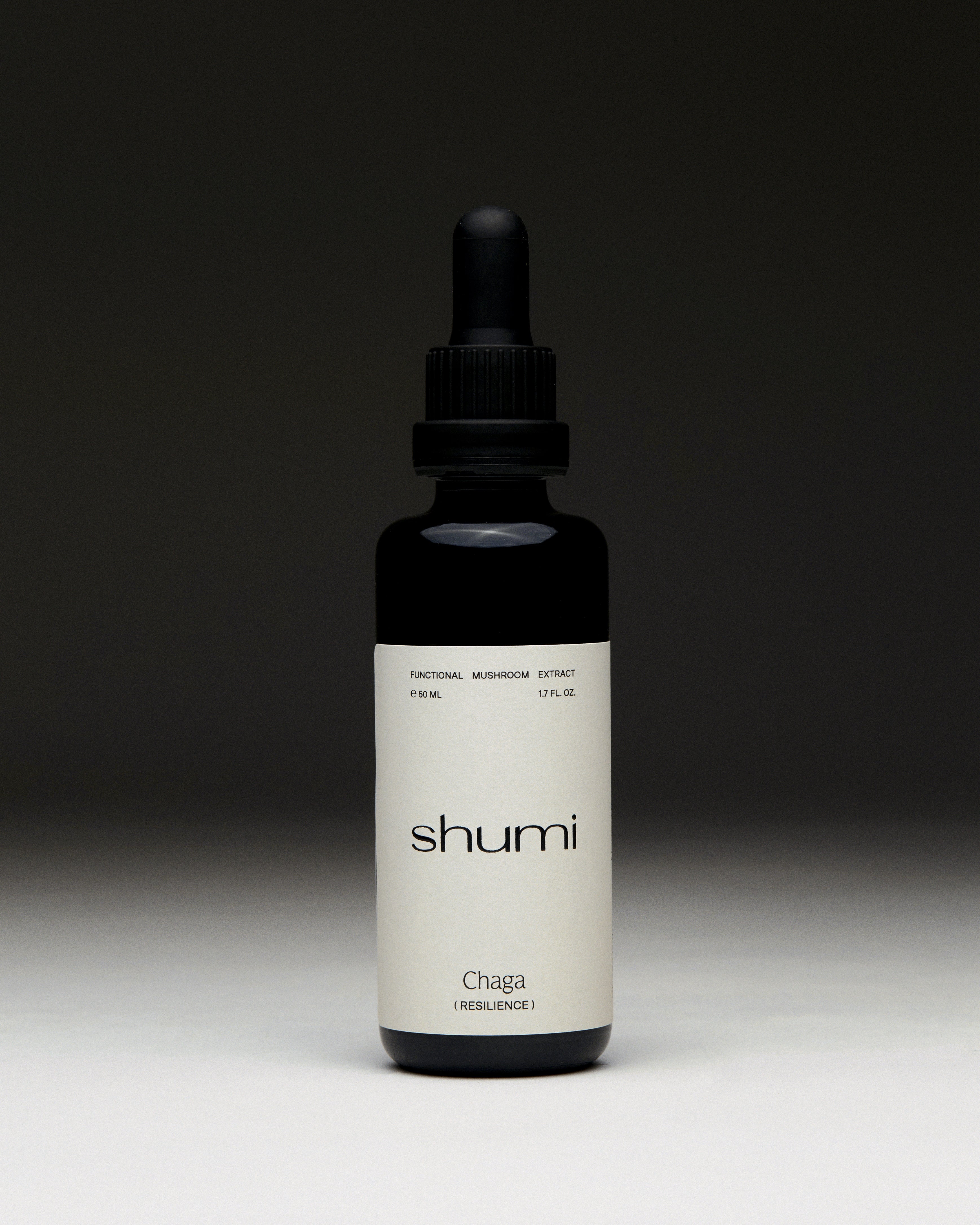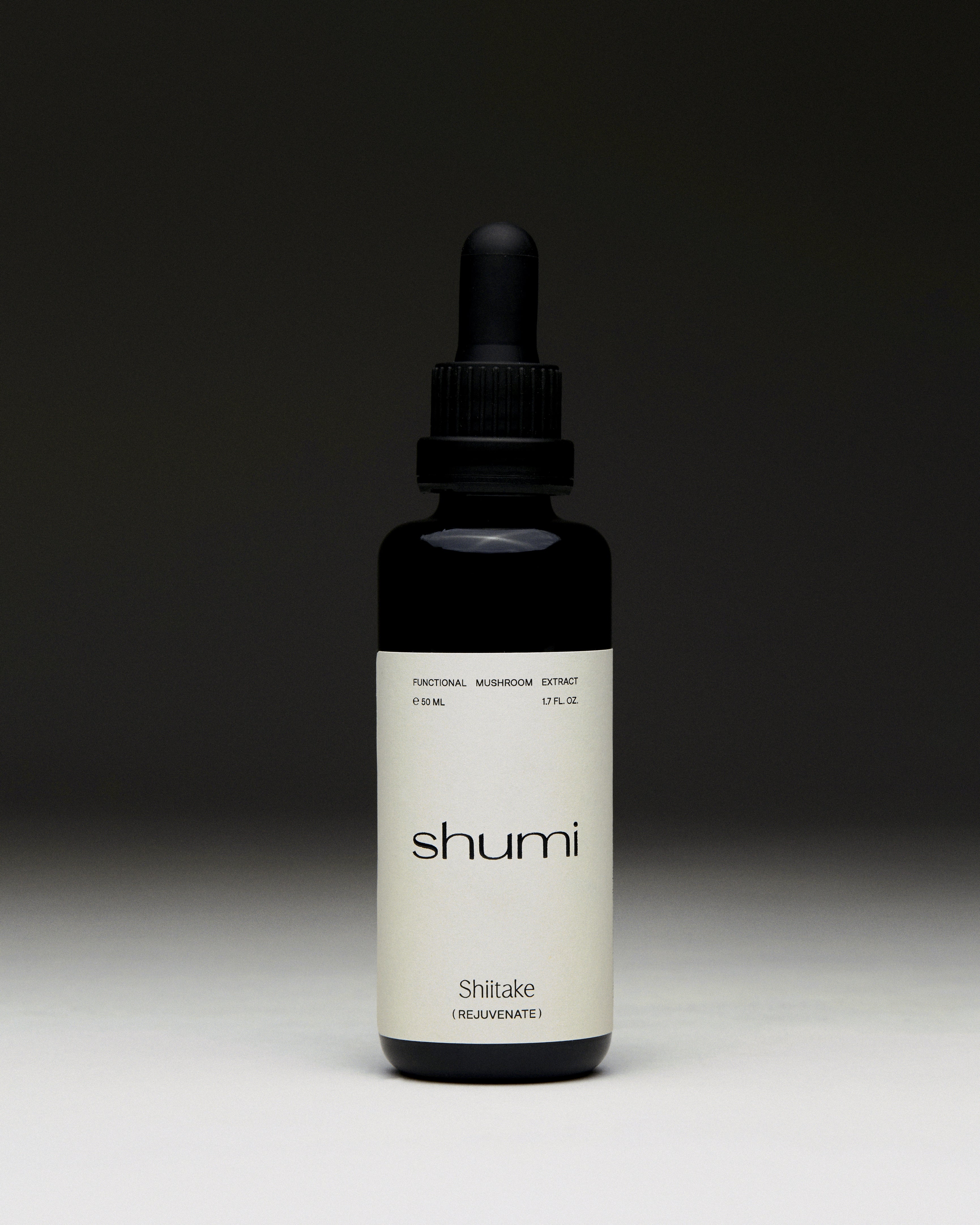


Shiitake and chaga support digestion in two different but complementary ways: shiitake acts like a prebiotic that feeds the good bacteria in your gut, while chaga is studied for calming gut inflammation and supporting the gut lining. Neither is a quick fix for a heavy meal, but as part of a routine they are a genuinely useful, food-derived way to support how your gut works. Here is what each one does, and how to actually take them.
Most gut advice begins and ends with probiotics, fibre and fermented foods, all of which are worth doing. Functional mushrooms are the less obvious addition, and the reason they belong in the conversation is that their fibres and compounds act on the gut in ways that complement, rather than duplicate, the usual advice.
Why gut health is worth the attention
The gut does far more than break down food. It is closely tied to immunity, mood and energy, largely through the community of bacteria living in it. When that community tips out of balance, the everyday signs are familiar: bloating and indigestion, feeling sluggish, reacting to more foods than you used to, and catching every bug going around. Supporting the microbiome is really about tilting that balance back in the right direction, and this is where both mushrooms earn their place.
Shiitake: a prebiotic that feeds good bacteria
Shiitake (Lentinula edodes) is best known in the kitchen, but its real gut value is as a prebiotic. Its beta-glucan fibres are not digested by you; they are food for beneficial bacteria like Bifidobacteria and Lactobacilli, the same populations that help you break down food and absorb nutrients efficiently. Shiitake also contains lentinan, a compound studied for supporting the immune tissue lining the gut, where a large share of your immune system actually sits. The practical upshot: feed the good bacteria consistently and you support a steadier, more resilient microbiome. You can read more on the shiitake extract page.

Chaga: for calm and a settled gut lining
Chaga (Inonotus obliquus) works from a different angle. It is one of the most antioxidant-dense foods studied, and its relevance to digestion is mostly about inflammation and the gut lining. As registered dietitian Beth Czerwony of the Cleveland Clinic notes, the antioxidants in chaga may help support a balanced inflammatory response, which matters because low-grade gut inflammation sits behind a lot of everyday digestive discomfort. Chaga's betulinic acid, polyphenols, melanin and beta-glucans are studied for easing that inflammatory load and supporting the integrity of the intestinal lining, which is relevant to bloating and food sensitivities. It is worth being honest that this gut-lining evidence is so far mostly from laboratory and animal studies rather than human trials. It is also studied for supporting the liver, which does quiet but essential work in digestion. See the chaga extract for more.
How to take them
A dual-extracted liquid is the simplest way to get a consistent, absorbable dose: about 2 ml a day (two half-pipettes) of each, stirred into warm water, herbal tea, coffee or a smoothie. Chaga also has a long history as a tea, which suits anyone who likes a warm daily tonic, and shiitake can be taken the same way. Whichever form you choose, consistency over a few weeks matters more than any single dose, because the microbiome shifts gradually rather than overnight. If you want to understand why concentrated extracts absorb well, we cover it in why bioavailability matters in mushroom supplements.
The bottom line
Shiitake feeds the good bacteria; chaga helps keep the gut calm and its lining settled. Used together and consistently, they are a low-effort, food-derived way to support digestion alongside the basics of fibre, hydration and real food. You will find both in Shumi's extracts range.
References
- Jayachandran, M., Xiao, J., & Xu, B. (2017). A Critical Review on Health Promoting Benefits of Edible Mushrooms through Gut Microbiota. International Journal of Molecular Sciences, 18(9). https://doi.org/10.3390/ijms18091934
- Hu, Y., Teng, C., Yu, S., Wang, X., Liang, J., Bai, X., Dong, L., Song, T., Yu, M., & Qu, J. (2017). Inonotus obliquus polysaccharide regulates gut microbiota of chronic pancreatitis in mice. AMB Express, 7(1), 39. https://doi.org/10.1186/s13568-017-0341-1
- Glamočlija, J., Ćirić, A., Nikolić, M., Fernandes, Â., Barros, L., Calhelha, R. C., Ferreira, I. C., Soković, M., & van Griensven, L. J. (2015). Chemical characterization and biological activity of Chaga (Inonotus obliquus), a medicinal "mushroom". Journal of Ethnopharmacology, 162, 323-32. https://doi.org/10.1016/j.jep.2014.12.069