

Functional mushrooms contain bioactive compounds, including beta-glucans, triterpenoids and ergothioneine, that are studied for the ways they may support the body, though much of the research is still early.
Have you ever wondered if there is more to mushrooms than their earthy flavour and culinary versatility? Alongside their use as food, functional mushrooms contain a range of compounds that researchers have studied for their potential to support health and wellness. Let's look at some of the best-known of these compounds and what the science does, and does not yet, tell us about them.
The appeal of functional mushrooms
Functional mushrooms have been used in traditional practices for centuries, particularly in Eastern cultures. They contain a variety of bioactive compounds that have drawn interest in nutrition and wellness research. From studies on immune support to work on cognitive function, the compounds within these mushrooms are an active and promising area of study.
Beta-glucans: the immune modulators
One of the most well-researched components found in functional mushrooms is beta-glucans. These naturally occurring polysaccharides are studied for their immune-modulating properties. Research suggests they may help support the activity of immune cells such as macrophages and natural killer cells, which are part of the body's natural defences (Bisen et al., 2010). This is one reason functional mushrooms like reishi, shiitake and maitake are of interest for supporting immune health.

Beta-glucans continue to be studied for other potential roles in the body, and they are one of the main reasons functional mushrooms feature so often in nutrition research. As with many natural compounds, much of this work is ongoing, so beta-glucans are best thought of as a promising area of study rather than a proven remedy.
Triterpenoids: the anti-inflammatory agents
Triterpenoids are another class of compounds found in certain functional mushrooms, particularly in reishi. These molecules have been studied for anti-inflammatory and antioxidant properties, which may help support the body against oxidative stress (Wachtel-Galor et al., 2011). This is part of why reishi has such a long history of traditional use.
Much of the research on triterpenoids comes from laboratory studies, and they remain an active area of interest for their antioxidant activity and their potential to support healthy cellular function. Their effects in people are still being investigated.
Ergothioneine: the cellular protector
Ergothioneine is a naturally occurring antioxidant that is concentrated in mushrooms like shiitake and oyster. This compound has been studied for its ability to help protect cells from the effects of oxidative stress, which is part of what makes it interesting for cellular health (Cheah & Halliwell, 2012).
Researchers have also explored ergothioneine in relation to the ageing process, on the basis of its antioxidant properties. Its precise physiological roles are still being studied, so it is best understood as a compound of active scientific interest rather than one with confirmed benefits in people.

Adaptogens: the stress helpers
Many functional mushrooms, such as cordyceps and lion's mane, are often described as adaptogens. Adaptogens are natural substances traditionally described as helping the body adapt to stress and maintain balance (Panossian & Wikman, 2010). Including foods traditionally regarded as adaptogenic in your routine is a popular part of a lifestyle focused on managing everyday stress, although research in this area is still developing.
Lion's mane in particular has been studied in relation to cognitive function, memory and focus, which is one reason it has become a popular choice for people interested in these compounds. As with other functional mushrooms, more research is needed to confirm how these effects work in people.
Prebiotics: the gut health supporters
Functional mushrooms also contain prebiotic fibres, which can serve as food for beneficial gut bacteria. A varied gut microbiome is part of healthy digestion and nutrient absorption. By supporting the growth of beneficial bacteria, mushrooms like turkey tail and chaga may help support a balanced gut ecosystem as part of a fibre-rich diet.
Prebiotic fibres are also involved in the production of short-chain fatty acids in the gut, which are an active area of nutrition research. As with the other compounds here, this work is ongoing and best viewed as a promising direction rather than a settled conclusion.
Embracing the benefits of functional mushrooms
Incorporating functional mushrooms into your daily routine can be as simple as adding them to your meals, taking them as supplements, or enjoying them in teas and tinctures. The growing body of research on their compounds makes them an interesting addition to a wellness routine, and understanding these compounds helps you make informed choices. If you would like to choose between formats, our guide to mushroom extracts vs. powders is a helpful next read.
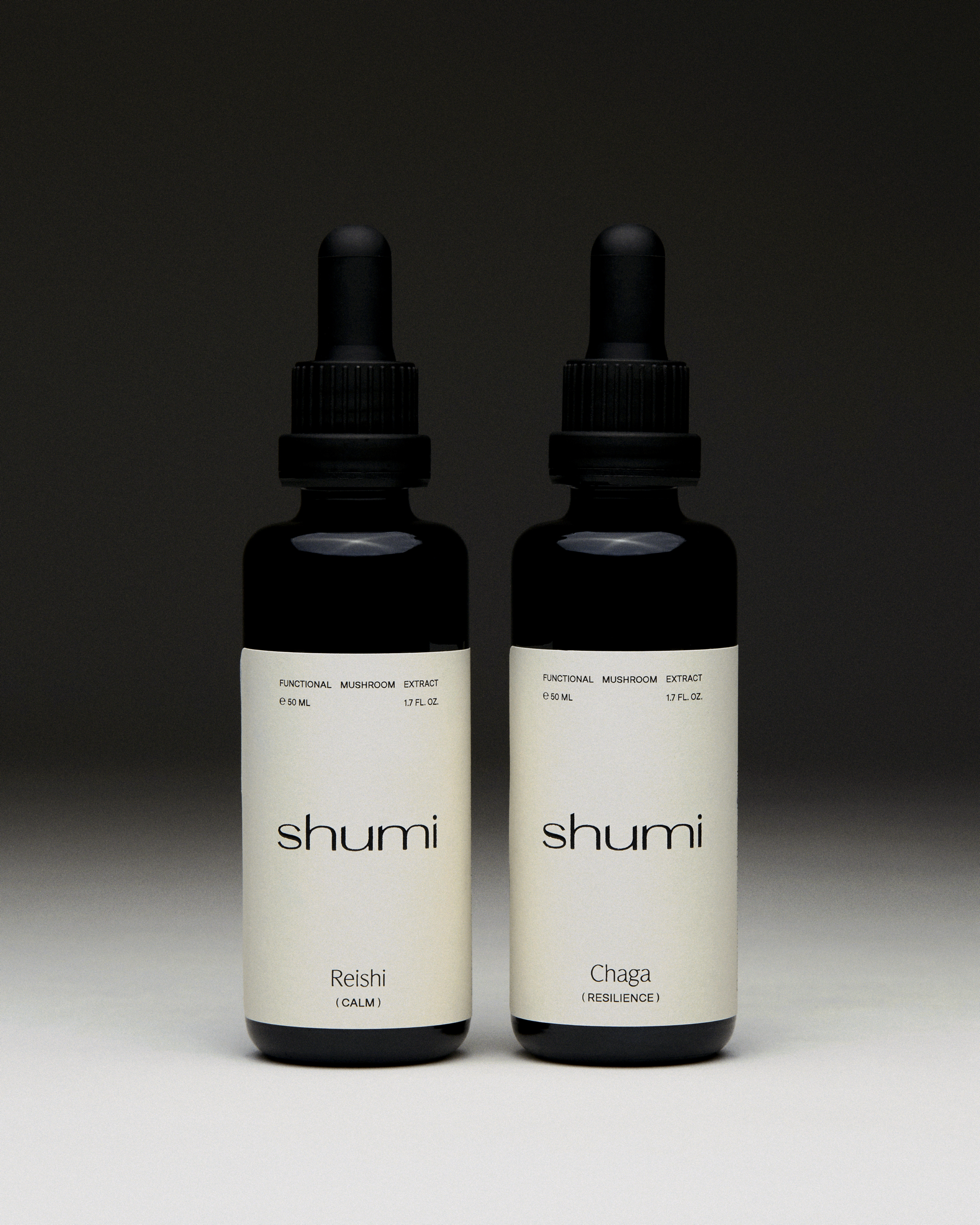
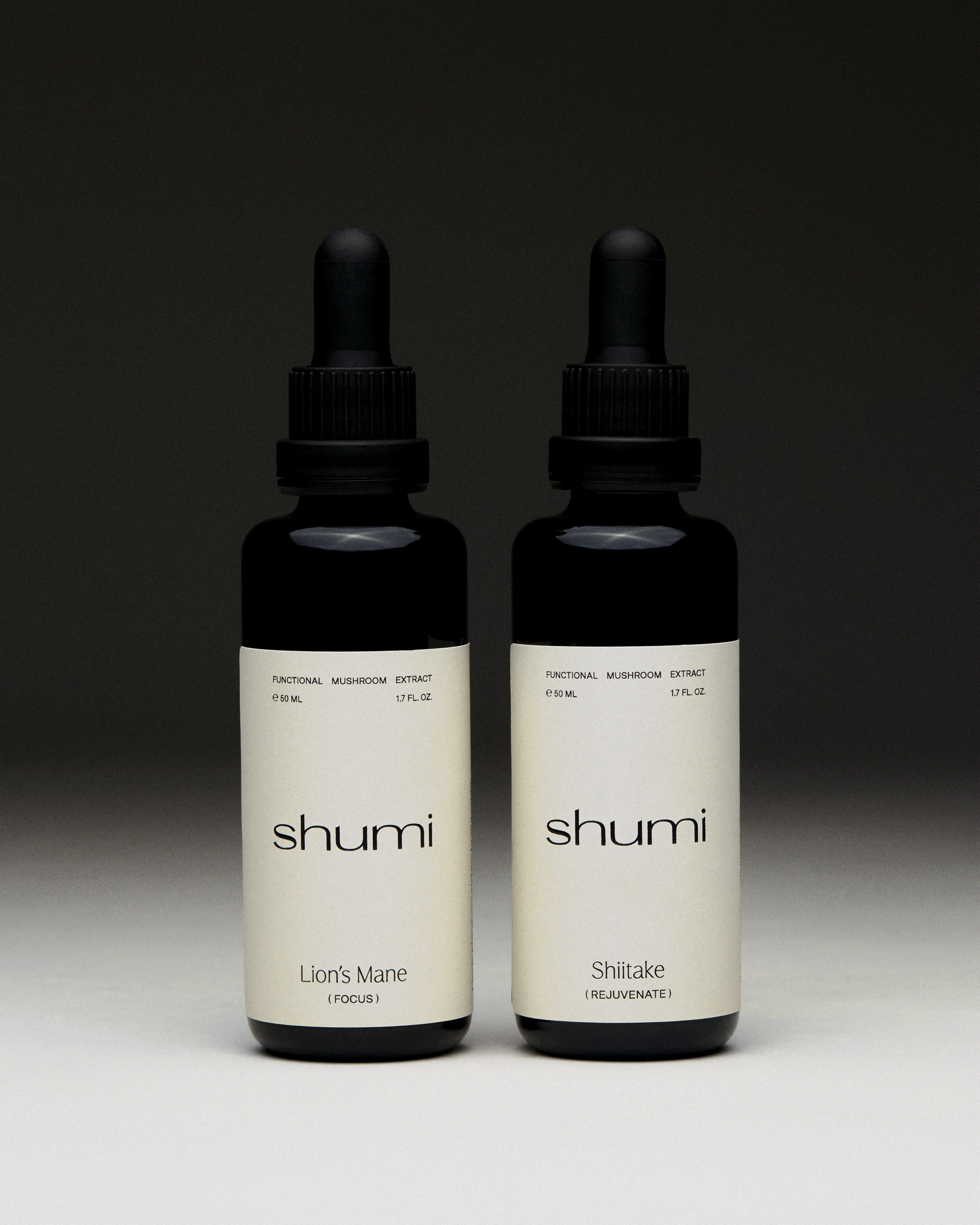
Explore the potential of functional mushrooms with Shumi's premium liquid extracts, including our Reishi Extract and the rest of our range, crafted to deliver pure extracts to support your wellness journey.
References
- Bisen, P. S., Baghel, R. K., Sanodiya, B. S., Thakur, G. S., & Prasad, G. B. (2010). Lentinus edodes: a macrofungus with pharmacological activities. Current Medicinal Chemistry, 17(22), 2419-30. https://doi.org/10.2174/092986710791698495
- Wachtel-Galor, S., Yuen, J., Buswell, J. A., & Benzie, I. F. F. (2011). Ganoderma lucidum (Lingzhi or Reishi): A medicinal mushroom. In I. F. F. Benzie & S. Wachtel-Galor (Eds.), Herbal Medicine: Biomolecular and Clinical Aspects (2nd ed.). CRC Press/Taylor & Francis. https://www.ncbi.nlm.nih.gov/books/NBK92757/
- Cheah, I. K., & Halliwell, B. (2012). Ergothioneine; antioxidant potential, physiological function and role in disease. Biochimica Et Biophysica Acta (BBA) - Molecular Basis of Disease, 1822(5), 784-793. https://doi.org/10.1016/j.bbadis.2011.09.017
- Panossian, A., & Wikman, G. (2010). Effects of Adaptogens on the Central Nervous System and the Molecular Mechanisms Associated with Their Stress-Protective Activity. Pharmaceuticals (Basel, Switzerland), 3(1), 188-224. https://doi.org/10.3390/ph3010188